YouTube Music Rolls Out AI Labels for Songs
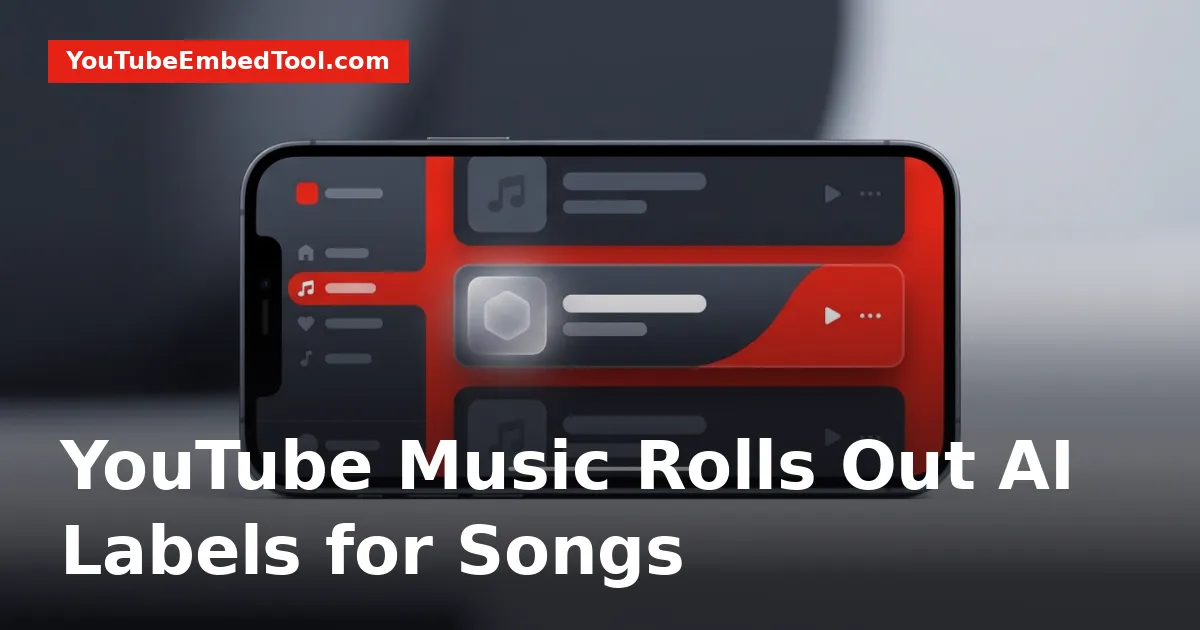
YouTube has officially launched dedicated generative badges to indicate when songs are produced using synthetic tools. The rollout of YouTube Music AI labels brings clear transparency to listeners by marking tracks where automated generation played a significant role in creating the music, lyrics, or vocals. Introduced on October 14, 2026, this feature allows users to inspect track details directly from the player screen.
The update responds to mounting demand from listeners and the wider music industry for clear boundaries between human-created and machine-generated audio. Below is everything you need to know about how the labeling system operates, which songs receive a badge, and where the rollout goes next.
What Are YouTube Music AI Labels?
The new transparency system introduces an explicit badge directly onto the now-playing interface across YouTube Music. When you listen to a qualifying song, an interactive tag appears on the screen alongside the standard track metadata.
Tapping or clicking this badge slides open an informational drawer. This drawer outlines the specific ways synthetic generative tools contributed to the audio file. Rather than relying on ambiguous disclaimers, the drawer gives listeners clear context about whether the composition, vocal performance, or lyrical content originated from synthetic models.
This update is part of a broader platform push toward catalog transparency. For updates on how YouTube handles other catalog adjustments, check our coverage in YouTube News.
Qualifying Tracks vs. Assistive Audio Tools
Not every song produced with modern digital tools will receive a badge. YouTube makes a strict distinction between generative systems that author content and assistive engineering software that enhances human performance.
What Triggers the Label
The badge applies specifically to releases where generative models played a central, significant role in the creative audio production. YouTube focuses on three core creative pillars:
- Synthetic Vocals: Tracks utilizing voice models to generate primary, backing, or featured vocal performances.
- Generative Composition: Instrumental arrangements, melodies, chords, or full musical scores produced directly by generative models.
- Generated Lyrics: Songwriting, verses, or lyrical structuring generated through machine-learning text tools.
If any of these foundational elements rely heavily on generative generation, the track falls under the mandatory labeling criteria.
What Remains Exempt
Routine studio production tools and engineering utilities are completely exempt from the badge. YouTube recognizes that producers have used digital signal processing for decades to refine human recordings. The following assistive audio technologies do not trigger a label:
- Equalization (EQ): Standard frequency adjustments and tonal shaping.
- Pitch Correction: Routine pitch-tuning tools used to polish vocal takes.
- Automated Mastering: Algorithmic limiting, compression, and loudness optimization applied to a completed mix.
The following table outlines how YouTube differentiates these production techniques:
| Production Method | Example Technologies | Label Applied? |
|---|---|---|
| Generative Vocals | Synthetic voice synthesis, vocal cloning models | Yes |
| Generative Composition | Model-created melodies, algorithmic full-song generators | Yes |
| Generative Lyrics | Synthetic text generation for song verses and hooks | Yes |
| Routine Pitch Correction | Digital pitch correction, vocal alignment tools | No |
| Equalization & Dynamics | Digital EQ, multi-band compression, dynamic filters | No |
| Automated Mastering | Cloud-based mastering chains, algorithmic limiters | No |
How the Dual Detection System Works
To ensure catalog accuracy, YouTube does not rely on a single verification channel. Instead, the platform has instituted a dual approach that pairs industry disclosures with automated detection.
1. Industry and Distributor Disclosures
The primary tier of the system relies on metadata submitted during the music distribution pipeline. Record labels, independent aggregators, and digital distributors are now requested to declare generative usage upon track delivery. When a distributor flags that a release contains generated vocals, compositions, or lyrics, the player screen automatically applies the informational badge.
2. Internal Algorithmic Detection
Because voluntary disclosure does not cover every scenario, YouTube also employs internal algorithmic detection systems. These automated scanning tools inspect audio files across the catalog to identify unlabeled synthetic uploads. If the algorithms detect that a song was created using uncredited generative models, the system flags the audio and applies the corresponding informational drawer.
This hybrid approach mirrors how YouTube handles catalog integrity across other formats, similar to how YouTube Shorts algorithm updates target unoriginal videos across video feeds.
Supported Platforms and Future Expansion
The new transparency feature began its rollout on October 14, 2026, targeting specific listening environments before expanding platform-wide.
Current Availability
As of today, the badges and informational drawers are active across:
- The dedicated YouTube Music mobile app (iOS and Android).
- The YouTube Music web player on desktop browsers.
Listeners can interact with the tag directly on their active playback screen across both interfaces.
Planned Expansion to the Main App
While the rollout is currently focused on the dedicated music client, music consumption frequently occurs on the core video platform. YouTube has confirmed that the labeling framework will expand to music content across the main YouTube video application in the future. Once implemented, viewers watching official audio uploads or music videos on the primary platform will see equivalent badges.
This follows a series of steady interface enhancements across both services, including recent updates like the YouTube sleep timer, miniplayer, and playback speed tools.
Current Limitations: Filtering and Search
While the introduction of the badge provides unprecedented clarity, the feature currently carries a key limitation for listeners who wish to curate their feeds strictly around human-made recordings.
At present, YouTube has not introduced a toggle or filtering mechanism to exclude labeled songs from:
- Search Results: Searching for a genre or mood will return both human and machine-generated music side by side.
- Algorithmic Radio: Starting a radio station from an artist or track can still pull labeled songs into the queue.
- Automatic Playlists: Curated and personalized mixes continue to include labeled tracks without a dedicated exclusion switch.
Listeners can view the informational drawer to understand a track's origins, but they cannot currently instruct the algorithm to bypass labeled tracks automatically.
What Creators, Labels, and Listeners Should Do
The arrival of clear track classifications impacts how songs are submitted, cataloged, and consumed.
For Record Labels and Independent Artists
- Audit Your Release Metadata: Check with your digital distributor to ensure you accurately report any generative tools used in your compositions, vocals, or lyrics. Accurate disclosures prevent algorithmic mismatches.
- Differentiate Assistive Tools: Do not flag tracks that simply utilize automated mastering or standard pitch correction. Routine audio engineering does not require a declaration.
- Inspect Active Catalog Entries: Review your published discography on the web player to ensure that informational badges display the correct context for your tracks. You can use our free YouTube Video ID Finder & Link Converter to locate specific track uploads and check their status across platforms.
For Listeners
- Check the Now Playing Screen: When streaming music on mobile or web, look for a badge positioned near the track title and artist details.
- Open the Drawer for Context: Tap or click the badge whenever you want to see exactly which parts of the production—such as lyrics, instrumentation, or vocal tracks—were synthetically generated.
- Stay Informed on Platform Changes: Monitor app updates as YouTube prepares to bring these indicators to the primary video interface in upcoming releases.
Frequently asked questions
When did YouTube Music AI labels launch?
YouTube officially announced and began rolling out the labels on October 14, 2026 across YouTube Music mobile and web players.
Does using pitch correction or automated mastering trigger the label?
No. Assistive engineering tools like pitch correction, routine equalization, and automated mastering are completely exempt from the badge.
Can I filter out labeled AI songs from my playlists or radio?
Not currently. YouTube has not introduced an exclusion toggle or filter to remove labeled tracks from search results, automatic radio queues, or playlists.
Will these labels appear on the main YouTube app?
Yes. While currently focused on YouTube Music players, YouTube confirmed that the labeling system will expand to music content across the main YouTube application in the future.