YouTube Shorts Algorithm Updates to Target Unoriginal Videos
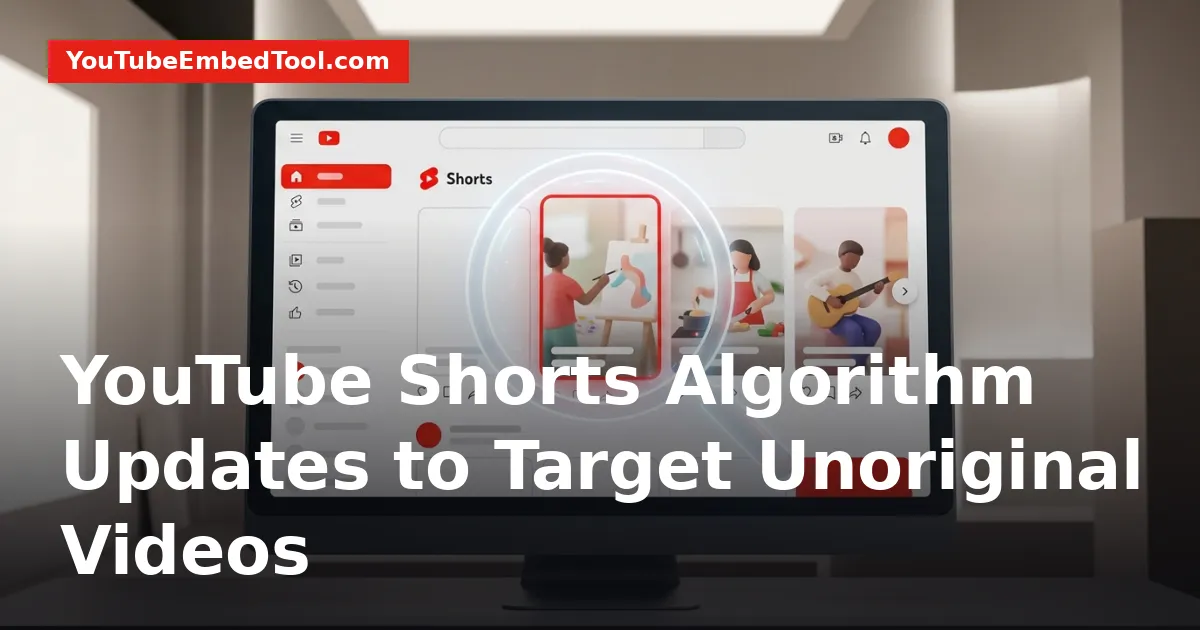
The latest YouTube Shorts algorithm update original content rollout actively deprioritizes re-uploaded, aggregated, and minimally edited third-party clips across recommendations. Unveiled on October 1, 2026, this system adjustment restricts the reach of accounts that republish footage without adding substantive creator value. Reposted videos remain visible on channel profiles, but their exposure within the Shorts feed and personalized streams is significantly reduced.
Announced through the YouTube Help Community by TeamYouTube and detailed by Creator Liaison Rene Ritchie on Creator Insider, the update marks a clear shift in how YouTube distributes short-form video. The briefing, titled "Prioritizing Original Content on Shorts," outlined the platform's focus on elevating original video production while curbing the spread of low-effort re-uploads.
Algorithmic Ranking vs. Upload Restrictions
YouTube clarified that this policy adjustment operates strictly as an algorithmic ranking change rather than a copyright enforcement action or an upload ban. Channels are not receiving automated community strikes or account suspensions simply for uploading curated clips.
Instead, the recommendation engine modifies how videos are surfaced:
- Feed Distribution: Channels identified as primary aggregators will see their impression share cut inside the dedicated Shorts feed.
- Personalized Recommendations: Unoriginal clips will be filtered out of viewer homepages and algorithmic recommendation carousels.
- Channel Profile Accessibility: Re-uploaded videos remain hosted on the creator's channel page, allowing direct subscribers and profile visitors to watch them normally.
Because this shift targets discovery rather than hosting rights, creators relying on re-uploaded clips will notice steep drops in traffic without receiving formal policy notifications in YouTube Studio. For ongoing coverage of platform announcements like this, check our YouTube News section.
Understanding the YouTube Shorts Algorithm Update Original Content Rules
Under this ranking update, YouTube's systems monitor whether footage features genuine creative input or merely recycles existing assets. The change specifically targets compilation channels, clip aggregation hubs, and reaction accounts that make only superficial adjustments.
According to YouTube, several common re-uploading techniques no longer qualify as original contributions:
- Narrative Descriptions: Adding basic voiceover that merely describes on-screen action as it unfolds.
- Superficial Filters: Applying color grading, border effects, background blurs, or speed shifts to bypass automated checks.
- Minor Technical Trims: Cutting seconds off the beginning or end of another creator's clip.
- Bulk Templates: Placing third-party footage inside pre-made frames or automated layouts without supplementary creative work.
To help separate acceptable modifications from low-effort curation, review how the updated recommendation engine evaluates common Shorts formats:
| Content Format | Algorithmic Status | Why It Is Affected |
|---|---|---|
| Clip Aggregation | Deprioritized | Reposting podcast clips, TV scenes, or sports footage without modification. |
| Basic Voiceover Commentary | Deprioritized | Merely describing visual action without providing new insights or critique. |
| Bulk Template Compilations | Deprioritized | Mass-producing reposts inside generic graphical frames. |
| Analytical Commentary | Maintained Distribution | Offering substantive breakdown, research, or historical context over clips. |
| Original Narrative Production | Prioritized | Using original footage, scripted storytelling, or transformative editing. |
What Qualifies as Substantive Original Value?
Creators who incorporate third-party footage into their Shorts must provide clear, transformative value to retain visibility in discovery feeds. YouTube emphasized that the Shorts feed will continue supporting fair, creative uses of existing footage if the channel contributes genuine perspective.
To preserve feed reach, creators must incorporate elements such as:
- Distinctive Analytical Commentary: Providing education, expert critique, or deep-dive analysis that goes beyond summarizing the video.
- Unique Editing Structures: Constructing new narratives, educational comparisons, or artistic transformations that reshape the original context.
- Meaningful Storytelling: Using short snippets as supporting evidence for an overarching original script or documentary premise.
- Original Perspectives: Demonstrating personal insights, professional breakdowns, or alternative viewpoints that stand on their own.
Creators who want to guide audiences to other videos without risking distribution penalties should use the Community Posts tab. YouTube specifically suggested linking to third-party work via community updates rather than clipping and re-uploading segments to the Shorts feed.
Impact on Channel Reach and YouTube Partner Program Goals
The update took effect globally on October 1, 2026, across both desktop and mobile Shorts feeds. Although this shift does not alter the written eligibility criteria for the YouTube Partner Program (YPP), its impact on overall channel metrics is immediate.
Because unoriginal uploads will no longer circulate through the Shorts discovery engine, channels relying on aggregated clips will face steep obstacles in building viewership. YPP qualification thresholds depend on public view counts and subscriber gains generated through active viewing, both of which require broad feed impressions. Creators tracking potential earnings under shifting view counts can model their projections using the YouTube Money Calculator.
Channels that switch to authentic production protect their discoverability. Aspiring creators looking to adapt their upload roadmaps can find strategic workflows in our guide to Creator Growth.
How Creators Should Adapt Their Workflow
If your channel previously relied on curated clips or compilation formats, adjusting your production pipeline is essential for sustaining impressions.
Step 1: Audit Your Catalog
Review your Shorts uploaded over recent months. If the majority of your library consists of clips taken from other podcasts, streams, or television programs, isolate which assets lack analytical voiceover or transformative editing.
Step 2: Rework Commentary and Scripting
Stop relying on basic summaries. If you reference third-party footage, script a dedicated breakdown offering original opinions, data, or technical context. Record high-quality camera or audio feeds that clearly establish you as the primary host.
Step 3: Shift External Recommendations to the Community Tab
When you discover an engaging video by another creator that your audience might enjoy, avoid cutting it into a short snippet. Share the link directly through a Community Post with your written thoughts, preserving your Shorts feed exclusively for original productions.
Step 4: Track Discovery Metrics in Analytics
Keep a close eye on your traffic sources. A sudden collapse in "Shorts feed" impressions combined with steady "Channel pages" traffic indicates that the recommendation engine has reclassified your uploads. Use these signals to iterate on your editing style until recommendations recover. You can also trace how your public video assets are indexed with the YouTube Video ID Finder & Link Converter.
By building an asset library rooted in original storytelling, detailed analytical commentary, and creative editing, creators can navigate these algorithm adjustments and secure sustainable placement in the Shorts feed.
Frequently asked questions
Does the new Shorts algorithm update result in copyright strikes?
No, YouTube confirmed this update is an algorithmic ranking shift rather than a copyright strike system or an upload ban. Re-uploaded videos remain on your channel profile, but their distribution across recommendation streams and the Shorts feed drops significantly.
Can I keep Shorts distribution if I add a voiceover to someone else's clip?
Simply adding a voiceover that describes the on-screen visual action does not qualify as an original contribution. To retain recommendation reach, your audio must provide distinctive analytical commentary, meaningful storytelling, or substantive original perspective.
When did the YouTube Shorts original content update go live?
The update went into effect globally on October 1, 2026, across all mobile and desktop Shorts feeds.
How should I share other creators' videos without losing algorithmic reach?
YouTube encourages creators to share third-party videos via the Community Posts tab rather than re-uploading snippets into the Shorts feed.