YouTube Pilots Second Chance Program for Terminated Creators
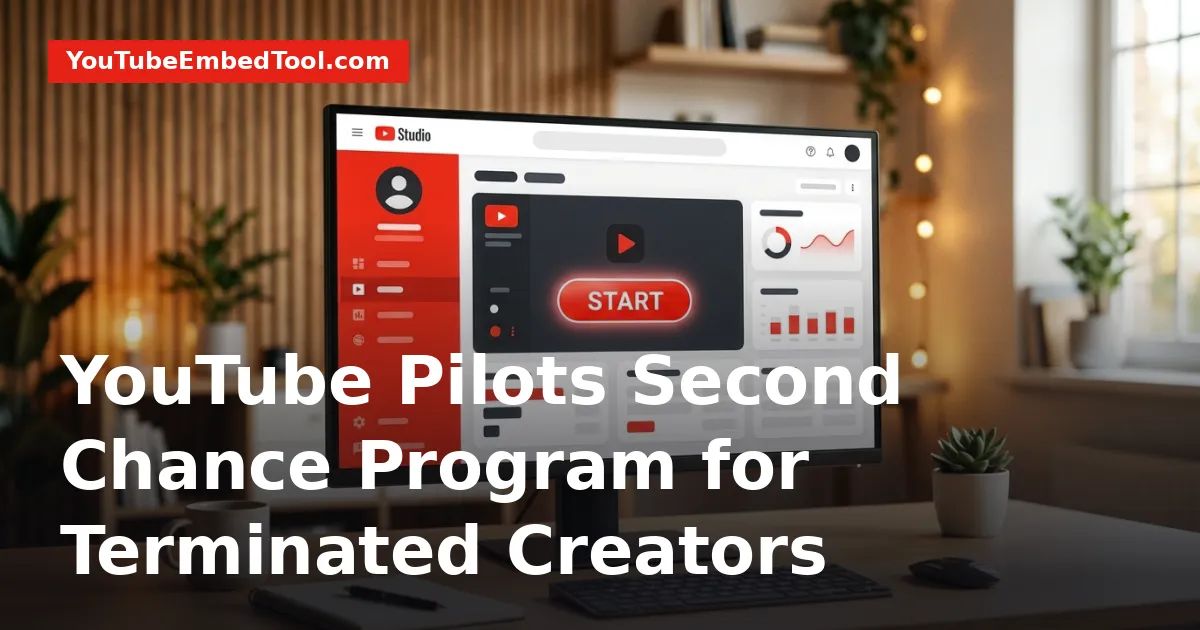
In an official Creator News update, YouTube announced a pilot program that offers qualified, previously terminated creators a structured way to return to the platform. Historically, having a channel terminated meant a permanent lifetime ban from creating or managing any YouTube channel once standard appeals failed. Under the new youtube second chance pilot program, select creators can request formal permission to launch a brand-new channel and start fresh.
This pilot does not reinstate lost channels or restore past metrics. Instead, it provides a strictly regulated, manual review process for creators who meet clear waiting-period and policy criteria. Here is a breakdown of how the program operates, who qualifies, which violations permanently disqualify an account, and what creators must do to submit a request.
What Changed: From Lifetime Bans to a Structured Return Process
For years, a YouTube termination was absolute. If a creator lost their channel due to Community Guidelines violations and had their initial appeal rejected, platform rules barred them from ever owning, creating, or accessing another channel. Creating a workaround channel under a new name or separate email address violated terms of service, leading to immediate secondary terminations.
The launch of this pilot marks a fundamental shift in how YouTube handles long-past policy infractions. Rather than maintaining an indefinite lockout for every terminated user, YouTube is testing an avenue for reformed creators to re-enter the platform legally.
However, YouTube emphasized that this is not a blanket pardon. The program does not bring back old channels, previous subscriber counts, or video archives. Instead, it offers approved creators permission to register a completely new channel under strict supervision, requiring them to rebuild their audience from ground zero.
Eligibility Criteria for the YouTube Second Chance Pilot Program
Because this is a phased, worldwide pilot, access is strictly limited to creators who fulfill specific conditions before applying. If you do not meet every prerequisite, the submission option will not be available.
To be considered eligible, creators must meet the following baseline requirements:
- A One-Year Waiting Period: At least one full year must have passed since the exact date of your channel termination.
- Active Google Account Access: You must still retain secure access to the original Google account associated with the terminated channel.
- Intact Account History: Creators who completely deleted their Google or YouTube accounts cannot participate, as YouTube's verification systems require the original account records to assess past actions.
If your channel was terminated less than twelve months ago, you cannot apply until the full year has elapsed.
Strict Disqualifications: Who Cannot Apply
YouTube established zero-tolerance exclusions for serious infractions. If your original channel was terminated for severe or dangerous violations, you are permanently barred from the second chance program.
The table below outlines the primary policy exclusions that result in immediate, permanent disqualification:
| Violation Type | Program Eligibility | Notes |
|---|---|---|
| Copyright Infringement | Disqualified | Repeat copyright strikes or severe DMCA actions are permanently excluded. |
| Child Safety Violations | Disqualified | Any termination involving child endangerment or related policies is strictly excluded. |
| Creator Responsibility Infractions | Disqualified | Violations involving severe off-platform harm or egregious platform abuses are ineligible. |
| Deleted Accounts | Disqualified | Creators who deleted their underlying Google or YouTube account cannot access the form. |
| Eligible Guidelines Violations | Eligible for Review | General Community Guidelines strikes older than one year may qualify for review. |
YouTube has reiterated that creators falling into any of the excluded categories will not receive a second chance, regardless of how much time has passed.
How YouTube Evaluates Requests
Submitting an application does not guarantee approval. YouTube does not rely on automated systems to grant approvals; every submission undergoes a manual review by YouTube staff.
During this evaluation, reviewers analyze several key factors:
- Past Violation Severity: Reviewers examine the specific nature of the original strikes and how severely the content violated platform safety standards.
- Repeat Infractions: The team reviews whether the creator demonstrated a pattern of repeated disregard for guidelines prior to termination.
- Off-Platform Behavior: YouTube considers conduct across external platforms to determine whether the creator continues to pose a risk to the community.
- Retired or Updated Policies: In some cases, channels were terminated under historical rules that YouTube has since altered or retired. If the original reason for termination is no longer an active policy violation, that context is factored into the review.
Step-by-Step: How to Request a New Channel
Because the feature is rolling out in a gradual, phased pilot across global regions, access will appear progressively for qualified accounts.
If you meet all eligibility criteria, follow these steps to check for and submit a request:
Step 1: Log In on a Desktop Browser
The pilot feature is accessible through YouTube Studio on desktop. Open your desktop browser and sign into the specific Google account connected to your terminated channel.
Step 2: Access YouTube Studio
Navigate to the YouTube Studio interface. If your account is recognized as eligible under the phased rollout, you will see a prompt labeled 'Request a new channel'.
Step 3: Complete and Submit the Request
Follow the on-screen instructions to submit your request for evaluation. Ensure your account information is up to date before submitting. Once submitted, your channel record is placed into the manual evaluation queue.
While waiting on policy decisions or managing channel security, creators can read about account safety in our guide on how YouTube adds temporary feature pauses for hacked accounts.
What Happens After Approval?
Receiving approval through the pilot program grants permission to establish a brand-new presence on YouTube, but it comes with precise operational boundaries.
1. Starting at Zero Subscribers and Views
YouTube does not resurrect your previous channel handle, video library, comments, or subscriber base. You begin with a clean slate, meaning you must build a new audience, publish new content, and re-establish your branding.
2. Standard Partner Program Thresholds
Monetization privileges are not automatically restored. To earn ad revenue on your new channel, you must meet all current YouTube Partner Program thresholds from scratch and submit a new monetization application. If you want to estimate what your potential earnings might look like once you rebuild your viewership, you can test different metrics with the YouTube Money Calculator.
3. Re-Uploading Previous Content
Creators often wonder whether they can publish their old video archives. Under the pilot rules, creators are permitted to re-upload previously removed video assets only if that content strictly complies with current Community Guidelines. Any video containing legacy policy violations must remain offline, as re-uploading non-compliant media will trigger immediate strikes on the new channel.
4. Distributing Your New Videos
Rebuilding an audience from zero requires proactive promotion. Once you start publishing compliant videos on your approved channel, embedding your uploads on external blogs, websites, and community forums is one of the most reliable ways to attract viewers. You can use our free YouTube Embed Code Generator to create custom embed codes, and follow our guide on how to get more views from embedded YouTube videos to maximize external reach.
Summary of the Pilot
The second chance pilot program represents an unprecedented opportunity for creators who lost their channels to standard Community Guidelines infractions in the past. If at least one year has passed, your Google account remains intact, and your termination was not related to copyright, child safety, or Creator Responsibility violations, monitor your YouTube Studio desktop dashboard to see if the request option is available to you.
Frequently asked questions
Does the second chance pilot restore my old subscribers and videos?
No. Approved creators receive permission to start a brand-new channel, but previous subscribers, view counts, and channel history are not restored.
Can I apply if my channel was terminated for copyright infringement?
No. YouTube has explicitly excluded copyright infringement, child safety violations, and Creator Responsibility infractions from the program.
How long do I have to wait after termination before applying?
At least one full year must have passed from the official date of your channel termination before you become eligible to request a new channel.
Can I re-upload my old videos to the new channel?
You may only re-upload previous video assets if the content fully complies with YouTube's current Community Guidelines.